SE Stakeholder Engagement – Productive Conversations (0.5d)
This training programme could equally be called ‘honest conversations’, ‘difficult conversations’, ‘constructive conversations’, or ‘challenging conversations’.
Fundamental to the success and flavour of organisational life – and systems practice interventions – are the quality of conversations we are able to have. If we can develop an honest and shared attempt to get at shared understanding – shared ‘truth’ if you like – or at least to fully appreciate each others’ understanding – then we can make true progress.
This interactive session will:
Discuss different types of feedback / difficult conversation
Understand how the brain rationalises and protect us
Increase awareness of our own habits and perceptions
Prepare and plan for a difficult conversation
Have effective performance conversations
Learn how to respond / look after yourself in the moment
And help you to have productive conversations even when it seems most unlikely. You will need to bring a record of an ‘unproductive’ conversation you have had, or fear having, and be prepared to work with others around it and other examples. You will end the session with the ability to surface more productive conversations even when it is difficult.
Trainer These courses are delivered by Benjamin P Taylor, an expert in systems, cybernetics, and complexity in service transformation.
In a classic 2005 article, ‘Techniques to Match our Values’, Weisbord set out the ‘learning curve’, with a movement from ‘experts solve problems’ to ‘’everybody’ solves problems’ to ‘experts improve whole systems’ to ‘’everybody’ improves whole systems’. Inherent in the development of systems practice from the start has been recognition of ‘the whole’, which comes in various forms from group dynamics to organisational viability.
This programme will give an overview of intervention approaches which ‘bring whole systems into the room’ rather than have a few experts work on individual issues. We will look at some of the history and the wide range of interventions that have been developed, and provide an overview of some of the most interesting.
We will compare and contrast these approaches and provide ‘ways in’ to consider when, and which, large group intervention might be an appropriate part of a systems practice intervention.
Trainer These courses are delivered by Benjamin P Taylor, an expert in systems, cybernetics, and complexity in service transformation.
This module provides learners with an understanding of the design of workshops and relevant considerations, taking into account the potentially very different contexts and definitions of what a ‘workshop’ is. It introduces a range of tools and approaches for workshop design, building on the facilitation module. It gives tools to consider evaluation and learning about workshop design, and compares various approaches, enabling learners to better select and apply appropriate workshop design approaches to their context.
A workshop can be distinguished from a meeting (though the boundaries may be blurry at times), by some of the following indicators:
intensive discussion and activity, designed to progress thinking and planning
intentionally designed activities (rather than simply an agenda), or flow
an impact focus, usually above and beyond just a discussion or decision – some kind of output taking an intervention or initiative forward
An alternative use of the work, to workshop (something), refers to taking a product or idea into a period of intense focused experimentation and development, often bringing in fresh or different perspectives than the original developers of the product or idea. This is of course closely related, but implies some partly-developed ‘content’ as the workshop focus, as opposed to simply a product or idea. In either case, some input is expected to a workshop, whether process, content, or both.
The learning will cover:
What a workshop is
Where and when we might use a workshop
A range of tools and approaches
How to appropriately select an approach, and design a workshop to fit the requirements in context
The importance of reflection and how to evaluate and build a learning loop
Workshop design tools, core and conceptual
This is a very practical, hands-on course based on you creating an initial workshop design from your context, using sources offered, and sharing and discussing it in the session.
This course complements the course on Facilitation for systems practice interventions, though they can be done independently or in any order.
Trainer These courses are delivered by Benjamin P Taylor, an expert in systems, cybernetics, and complexity in service transformation.
ICS2 Facilitation Skills for Systems Practice Interventions (0.5d)
This course provides learners with an understanding of the facilitation relationship in the context of systems intervention itself, and of the challenges it brings. It introduces a range of tools and practices for facilitation and provides guidance on workshop planning. Finally, it compares various approaches to facilitation, enabling learners to develop a stronger sense of the kind of facilitator they want to be.
Topics covered include:
The facilitraining rainbow – where do you stand?
Divergence, emergence, convergence;
Differentiation and integration method;
Adaptive change;
Facilitation for ‘robust systems’;
Session planning and session flow;
The perceptual positions;
Ground rules for workshops and ways into partnership;
Maintaining your authenticity;
Peter Block’s ‘six conversations that matter’;
Chris Corrigan’s ‘seven little helpers’;
Hosting and guiding and/or customer services;
Context cues;
History and three futures;
Power tools and making concrete – Naming The Thing.
Trainer These courses are delivered by Benjamin P Taylor, an expert in systems, cybernetics, and complexity in service transformation.
ICS1b Consulting for Systems Practice Interventions – (b) Core (0.5d)
This course provides learners with a deeper understanding of:
Discovery and research into the client system;
Power questions, layers of analysis, and objectifying ‘the system’;
Research and action-based approaches;
Third-party and whole systems approaches;
Maintaining the balance of responsibility for deep engagement;
Structuring analysis and feedback, developing commitment;
Choosing dirty or clean consulting.
To maximise your chances of being effective in achieving positive change, you should combine a sound understanding of systems approaches with well-developed intervention skills.
This in turn requires a clear conception of the role of the systems practitioner as ‘consultant’, of their relationships with stakeholders, especially the ‘client’, and the nature of the practitioner’s influence on the organisations they seek to transform.
Drawing on Flawless Consulting, Barry Oshry’s Organic Systems Framework, and more, Consulting for Systems Practice Interventions emphasises a collaborative approach and equal responsibility between the intervention practitioner and the client, navigating a path between the twin traps of ‘consultant as boss’ and ‘consultant as servant’.
These courses are relevant to anyone – consultant or not! – who is engaging in organisational change.
Trainer These courses are delivered by Benjamin P Taylor, an expert in systems, cybernetics, and complexity in service transformation.
ICS1a Consulting for Systems Practice Interventions – (a) Foundation (0.5d)
This course will provide learners with key principles and a structure for interventions. Topics covered include:
The five phases of the consultative process;
‘Techniques are not enough’: relationships in consulting;
Dealing with ‘the space of service’;
Setting up a clear ‘contract’ for interventions – including triangular and rectangular contracting;
Authenticity and setting your assumptions;
The client behind the client and the problem behind the problem;
To maximise your chances of being effective in achieving positive change, you should combine a sound understanding of systems approaches with well-developed intervention skills.
This in turn requires a clear conception of the role of the systems practitioner as ‘consultant’, of their relationships with stakeholders, especially the ‘client’, and the nature of the practitioner’s influence on the organisations they seek to transform.
Drawing on Flawless Consulting, Barry Oshry’s Organic Systems Framework, and more, Consulting for Systems Practice Interventions emphasises a collaborative approach and equal responsibility between the intervention practitioner and the client, navigating a path between the twin traps of ‘consultant as boss’ and ‘consultant as servant’.
These courses are relevant to anyone – consultant or not! – who is engaging in organisational change.
Trainer These courses are delivered by Benjamin P Taylor, an expert in systems, cybernetics, and complexity in service transformation.
For me, suffering extends beyond personal pain, often centered on wondering if my contributions align with the world’s needs. My interests range widely: from brain injuries to menopause, from open data to childhood play. Anger simmers when I witness political disrespect, wastefulness, and global conflicts. Balancing work passion with life’s complexities and health issues weighs heavily. Yet, introspection reveals it’s brooding and self-centric emotions that truly disturb my nights. On the flip side, grace emanates from simple joys: family, nature, and learning. External sources like music and podcasts offer solace. Thankfully, I can typically drift into peaceful sleep, grateful for comfort and security. As for you, what brings solace amidst life’s complexities? And remember, no coffee after 3 pm – it’s a rule!
A defining feature of biology is the use of a multiscale architecture, ranging from molecular networks to cells, tissues, organs, whole bodies, and swarms. Crucially however, biology is not only nested structurally, but also functionally: each level is able to solve problems in distinct problem spaces, such as physiological, morphological, and behavioral state space. Percolating adaptive functionality from one level of competent subunits to a higher functional level of organization requires collective dynamics: multiple components must work together to achieve specific outcomes. Here we overview a number of biological examples at different scales which highlight the ability of cellular material to make decisions that implement cooperation toward specific homeodynamic endpoints, and implement collective intelligence by solving problems at the cell, tissue, and whole-organism levels. We explore the hypothesis that collective intelligence is not only the province of groups of animals, and that an important symmetry exists between the behavioral science of swarms and the competencies of cells and other biological systems at different scales. We then briefly outline the implications of this approach, and the possible impact of tools from the field of diverse intelligence for regenerative medicine and synthetic bioengineering.
Systems Thinker | Management Consultant | Educator
Systems thinking has seen growing popularity in current times. With world events such as the COVID-19 pandemic, the Ukraine war, the macro-economic uncertainty in the developed world, and the climate emergency, governments, industries, nonprofits, and education institutions have come to realize that everything is connected to everything else and working in silos can be a recipe for disaster.
This is the Day 1 opening session of Waves Forum for Changemakers 2024 in Helsinki, Finland. In this fireside chat with Nora Bateson, International Bateson Institute, and Dave Snowden, Cynefin Company, hosted by Sara Lindeman, Leapfrog, we explore what changemakers can learn from complexity science to better understand change in complex social systems.
Key takeaways from the afternoon fireside chat about hashtag#complexity by Dave Snowden and Nora Bateson in Helsinki Waves event for change makers. 1️⃣ You can’t change a complex system by changing parts, but you can change interactions. 2️⃣ Do not try to fix a problem, change the ecosystem. 3️⃣ Do not change mindsets, change the context. 4️⃣ There are no linear causalities in complex systems. 5️⃣ Heterogenous systems evolve, homogenous do not. 6️⃣ Learn where you are now (as a system), move to ”adjacent possible”, and evaluate again. 7️⃣ Sustainable change happens at the local level.
A man with a watch knows what time it is. A man with two watches is never sure.[1]
At surface level, the adage emphasizes the consistency that arises when information comes from a single source and points out the potential pitfalls of having too much conflicting information. However, the underlying message is to question the apparent certainty of anyone who only has one source of information. The man with one watch has no way to identify error or uncertainty.
History: The saying was coined by the San Diego Union on September 20, 1930: “Confusion.—Retail jewelers assert that every man should carry two watches. But a man with one watch knows what time it is, and a man with two watches could never be sure.” Later this was — mistakenly — attributed to Lee Segall of KIXL, then to be misquoted again by Arthur Bloch as “Segal’s Law”.[2]
Segal’s law3 languagesArticleTalkReadEditView historyToolsFrom Wikipedia, the free encyclopediaSegal’s law is an adage that states:A man with a watch knows what time it is. A man with two watches is never sure.[1]At surface level, the adage emphasizes the consistency that arises when information comes from a single source and points out the potential pitfalls of having too much conflicting information. However, the underlying message is to question the apparent certainty of anyone who only has one source of information. The man with one watch has no way to identify error or uncertainty.History[edit]The saying was coined by the San Diego Union on September 20, 1930: “Confusion.—Retail jewelers assert that every man should carry two watches. But a man with one watch knows what time it is, and a man with two watches could never be sure.” Later this was — mistakenly — attributed to Lee Segall of KIXL, then to be misquoted again by Arthur Bloch as “Segal’s Law”.[2]
Georgina Voss’ book Systems Ultra: Making Sense of Technology in a Complex Worldis published by Verso in the UK and the US, in January 2024 https://gsvoss.com/systems-ultra
Georgina Voss will explore what a systems worldview is and how we experience and feel out our way within these structures.
By Centre for the Study of Existential Risk
Date and time: Tuesday, April 23 · 6 – 7:30pm GMT+1
Location: West HubJJ Thomson Avenue Cambridge CB3 0US United KingdomShow map
From finance to supply chains to payment platforms, our lives are increasingly defined by complex technological systems. Yet it can be surprisingly difficult to define what a system actually is, or what it feels like. In this public lecture, Georgina Voss will draw on storytelling and artistic practice to explore what a systems worldview is, what it does, and, crucially, how we experience and feel out our way within these structures.
Professor Emily So will act as discussant for the lecture. The event will be chaired by Dr Maya Indira Ganesh.
Speakers:
Georgina Voss is an artist, writer, and educator, and author of ‘Systems Ultra: Making Sense of Technology in a Complex World’ (Verso 2024). She co-founded and led the creative studios Strange Telemetry, and Supra Systems Studio (University of the Arts London).
Professor Emily So is Professor of Architectural Engineering in the Department of Architecture and Director of the Cambridge University Centre for Risk in the Built Environment (CURBE). Emily is a chartered civil engineer, specialising in urban risk and seismic safety, with notable work in earthquake casualty estimation and interdisciplinary collaborations. She contributed to an award-winning seismic-resilient building design in China (2017) and advises on disaster risk mitigation through SAGE. Recognized with the 2010 Shah Family Innovation Prize, Emily’s expertise spans diverse natural perils and international research initiatives.
Dr Maya Indira Ganesh is an assistant teaching professor at the Institute of Continuing Education (ICE) where she co-directs the , co-directing the MSt in AI Ethics and Society. Her research, rooted in cultural studies and feminist scholarship, explores the societal implications of algorithmic/AI technologies.. At CFI, Maya investigates how technology design intersects with people, places, and organizations, focusing on ethical and responsible AI. She has over a decade of experience as a researcher and activist in gender justice, security, and digital freedom of expression.
Please note there are tickets available for online or in-person.
If you are unable to attend the lecture, please return your ticket before the event through Eventbrite.
The Centre for the Study of Existential Risk is a multidisciplinary research centre within the University of Cambridge dedicated to the study and mitigation of existential risks that could lead to human extinction or civilisational collapse.
A presentation for the Oceania Chapter of the System Dynamics Society of the most memorable aha moments occurring during the past five decades while searching for understanding on the other side of complexity. These aha moments inspired me to become a Storyteller/Recovering Systems Thinker.
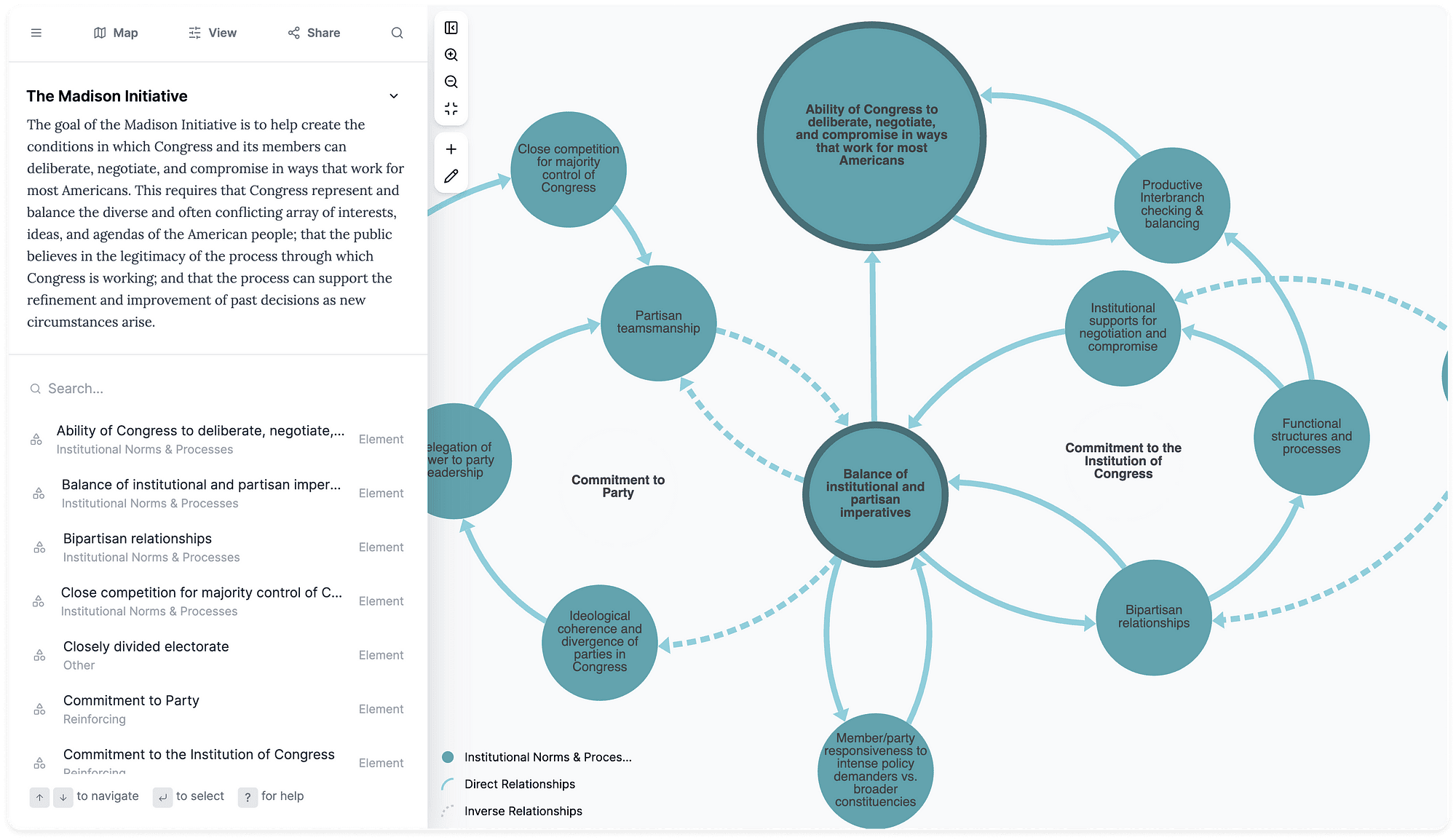
Send feedback to SystemsWiki@gmail.com or if you have a Kumu Account you can start a discussion on one of the elements or add to an existing discussion by clicking on a red asterisk.
The Cybernetics Society was honored to host Professor Karl J. Friston, Scientific Director: Wellcome Trust Centre for Neuroimaging for this talk. Professor Friston addressed the topic of how we can understand ourselves as sentient creatures and the principles that underwrite sentient behaviour, using the free energy principle to furnish an account in terms of active inference. A Q&A session followed.
UK Department for Health and Social Care invitation to tender for £8m consultancy support for adult social care – one single lot, three weeks to respond – over Easter
Commissioning Academy session with Gary Wallace today took me back to this from 2021 “Oh god. I have worked in public services for 24 years. Now trying to make an enquiry for an elderly relatives. Switchboard. Option 1 – social care. Goes through to ‘children and families’. Shome mishtake? Try again, no, that’s right – Recorded message about recording my call…” / Twitter
www.antlerboy.com * curator at www.syscoi.com * The Public Service Transformation Academy - Chief Executive - www.publicservicetransformation.org * RedQuadrant - public service network consultancy - www.redquadrant.com * SCiO - non-exec director - www.systemspractice.org * Quadrant Resourcing - excellent interim change people - www.quadrantresourcing.com I tweet at www.twitter.com/antlerboy Please connect to me at www.linkedin.com/in/antlerboy benjamin.taylor@redquadrant.com +44 (0)7931317230
View all posts by antlerboy - Benjamin P Taylor








 chosen path