
Baroness Casey just did something rare in adult social care. She named the thing we keep skirting around — it’s what she was appointed for.
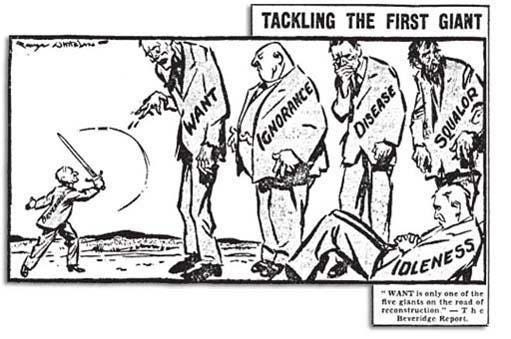
Beveridge had five ‘giants’. Casey says we now have a sixth: how we support an older, sicker population and greater levels of disability
Baroness Casey just did something rare in adult social care. She named the thing we keep skirting around — it’s what she was appointed for.
Beveridge had five ‘giants’. Casey says we now have a sixth: how we support an older, sicker population and greater levels of disability. And she’s right that we’ve never had a true ‘creation moment’ for social care, like so many things in the UK ‘constitution’. No shared agreement on what it’s for, what people should expect, or who pays.
So we’ve built a workaround culture: add-ons, sticking plasters, and endless boundary arguments about who is responsible, despite or because of buckets and buckets of legislation. Not because people don’t care, but because it’s nobody’s job to make it all work together.
Her talk of ‘fragility’ landed. It’s in the workforce we underpay and over-stretch. It’s in a ‘market’ that doesn’t behave like one. It’s in safeguarding treated as a local risk rather than a national duty. And it’s in the deep split between health and social care.
The point is not ‘more integration’. The point is ownership. If everyone owns it, nobody does. Accountability has to be designed, not wished into being. We this powerfully in our mapping of cross-system funding flows behind high-cost residential and secure placements for children and young people with complex needs and autism, published by the DfE — a system where incentives often pull in opposite directions. And we see it daily in our work with adult social care, health, police and crime, and commissioners across all three.
That’s hashtag#leadership work. And it’s why hashtag#socialcare and hashtag#nhs reform cannot be done as a side project, or at the whim of Ministers. They have to be a central project of the nation as a whole, central, local, and an engaged population.
**
Here’s my question. If we were serious about a public mandate for care, what’s the first rule or boundary in the current system you would delete — and what would you put in its place?
**
Mine’s simple.
Stop pretending the ‘market’ is the organising logic for adult social care.
Casey is right: we’ve drifted into a place where the state still carries the can — safeguarding, market oversight, last resort provision — but we act as if care is just another commodity. That contradiction drives most of the dysfunction. Collapse after collapse, wafer-thin margins. Workforce as a cost line rather than the heart of care.
In its place I’d draw a different rule. Care is core social infrastructure, so it demands clear public accountability for outcomes, stable funding, and deliberate design of provision. The opposite of centralisation. Not nationalisation of everything. But honesty that the state must actively steward what it’s most responsible far. A lot becomes clearer — workforce pay and status, market oversight, integration, and what people should expect when they need help.
If social care is the sixth ‘giant’, are we willing to treat it as nation-building infrastructure that needs real grip?
 chosen path