
(rewiring for local relationality 1/3)
Introduction
Join the debate on linkedin at https://www.linkedin.com/posts/antlerboy_publicservices-devolution-systemschange-ugcPost-7492848069080809472-rh-w/
To rewire, you start with the existing wiring as it’s developed over time. It’s a blunt metaphor; I tried a blunt test. Do you think it’s helpful?
Which public bodies can plausibly exercise a directly elected mandate to depart materially from UK Government policy or direction?
Not which office is nearest to the citizen. Not which organisation delivers the service. Not what the ONS calls ‘central’ or ‘local’; where does ultimate political control sit?
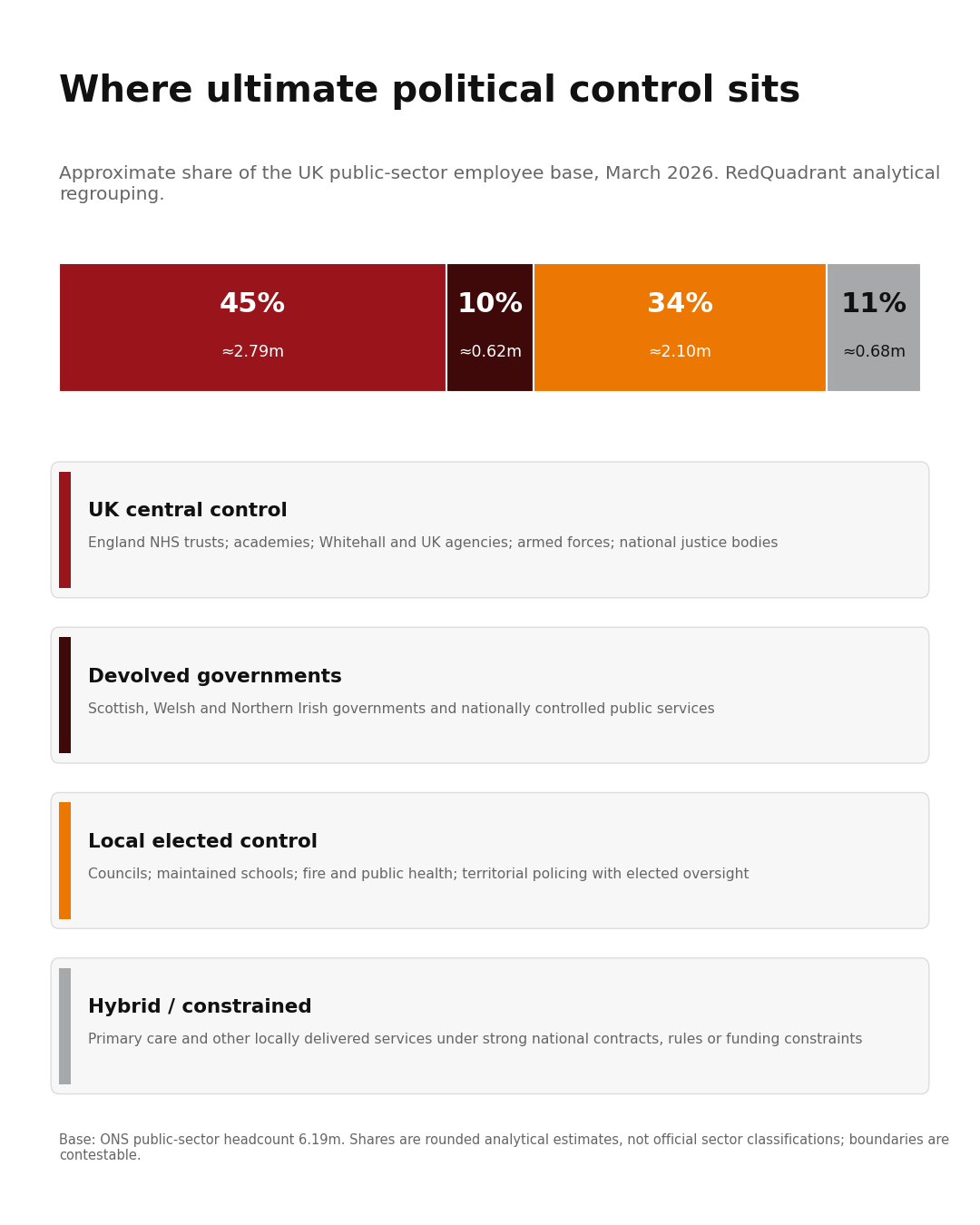
On my preliminary regrouping of the March 2026 public-sector employee base, roughly 45% sits under UK central control, 10% under the devolved governments, 34% under ‘local’ elected control, and 11% in hybrid or constrained arrangements. The boundaries are contestable. They are supposed to be. This is broad analytical grouping, not an official statistical classification.
The grouping is important though, because hospitals can operate locally while an NHS trust has no local democratic mandate to reject national direction. Academies serve particular communities, possibly very entrepreneurially, while their constitutional and funding relationship runs towards the centre. Primary care is locally delivered through a mixture of national contracts, professional authority, and place-based arrangements.
So when government promises ‘devolution, not delegation’, moving a function or funding stream is not enough.
Ask: who can define the purpose; move the money; alter the measure; commit capability; change the rule; accept the risk; and decide what happens when performance departs from plan.
A place that can see what is happening but cannot change those things has not received control. It has received a delivery responsibility.
The centre still has work that only it can do: rights, national scale redistribution, national infrastructure, protection against harmful variation, and intervention where lower levels can’t cope or manage consequences.
The issue is ‘fit’. Authority should sit where the relevant knowledge and consequences can be held. Learning has to travel in both directions.
The government has named the ambition: ‘Rewiring the State’. We need to rewire to bring power where it’s useful.
The practical test is whether the new wiring changes where perception, decision and correction happen.
A longer version of this is on my blog – link in the comments.
#publicservices #devolution #systemschange
Do you recognise this pattern?
Rewiring the state as a control problem
The state can move delivery closer to people without moving control. The test of real progress is whether authority, capability, measurement, and learning move towards the places where relevant knowledge exists, while national accountability remains connected across levels.
Power must move towards knowledge without breaking accountability
Benjamin Taylor • August 2026
| What I mean by control: the ability to perceive what is happening, act on it, learn from the result and correct course. It is not simply the power to issue instructions. |
The government has put a name to what it says it wants: ‘Rewiring the State’. (Not, interestingly, an original name)
The Cabinet Statement published on 31 July 2026 goes further than the usual language of localism. It promises a major transfer of powers, resources and functions to elected mayors and local authorities; ‘devolution, not delegation’; an operating principle of ‘devolving by default’; greater local control of tax revenues; more flexible integrated settlements; a smaller and more strategic centre; and the transfer of staff and capability alongside functions. It also promises to align public service geographies and replace routine consultation with more active forms of public participation.
Two days earlier, Prime Minister Andy Burnham put social care back at the centre of the reform argument, restating the commitment to a National Care Service, Baroness Louise Casey’s commission and a cross-party settlement. Whatever final model emerges, social care exposes the design question clearly: what should be guaranteed nationally, and what must remain capable of adapting around a person’s life?
Alongside this, the Neighbourhood Health Framework asks the NHS, councils and civil society to organise services around people’s lives, move towards prevention, and design locally with communities and the frontline. The English Devolution and Community Empowerment Act 2026 places strategic authorities across England on a statutory footing and includes a requirement for effective neighbourhood governance.
These are real shifts. The argument is no longer confined to think tanks, local government networks and reformers operating at the margins. The government has accepted much of the diagnosis: decisions are too centralised; departments fragment people’s lives; acute services absorb money that should be used earlier; local institutions lack fiscal freedom; and the centre often demands information about performance without understanding the work.
But ‘rewiring’ can mean different things. It can mean moving authority towards the places where knowledge exists. It can also mean installing faster wires through which local information travels upwards and central instruction travels downwards. Both can be called reform. Only one changes the operating model of the state.
ONS’s institutional classification for March 2026 puts 65.7% of public-sector employment in central government, 31.7% in local government and 2.6% in public corporations. That is an accounting classification, not a map of democratic control. A RedQuadrant analytical regrouping that separates the devolved governments and treats strongly nationally constrained local services as hybrid suggests roughly 45% under UK central control, 10% devolved, 34% local elected and 11% hybrid or constrained. The exact boundaries are contestable. The structural point is not: local delivery and local control are different things.
Figure 1. analytical regrouping of the March 2026 public-sector employee base. See methodology note for definitions and limitations.
The state has recognised its systemic problem
The government’s diagnosis now comes close to a systems diagnosis. People do not experience health, housing, work, transport, care, debt and family life as separate policy domains. They experience a situation. That situation develops over time, in a place, through relationships, institutions, material conditions and previous encounters with public services.
The administrative state sees something different. It sees categories, eligibility conditions, programmes, contracts, organisations and funding codes. Each body attempts to make the situation legible within its own remit. This destroys variety.
A person’s circumstances contain more variety than the service categories used to describe them. By the time their life has been converted into forms, assessments, referral reasons, risk scores and performance data, much of the information needed for sensible action has been stripped away.
The result is familiar. People repeat their stories. Needs are split into manageable fragments. Staff refer across boundaries they cannot cross. One organisation’s successful diversion becomes another organisation’s rising demand. The person eventually arrives at the most expensive part of the system, where action is unavoidable.
Take a care worker facing a situation that cannot be safely resolved inside a tightly timed visit. If the worker lacks the time, authority, information or access to wider support to stabilise the situation, the system can turn a manageable problem into an ambulance call, an A&E attendance or an admission. That is not simply a shortage of care. It is a failure of control.
The system has placed responsibility with someone who lacks the time, authority, information and resource to exercise it. It then uses a high-cost emergency service to absorb the consequences.
The same pattern appears across public services. Contact is handled by the least authorised person. Information is gathered to satisfy downstream processes rather than to understand purpose. Referrals are counted as completed work. Targets measure each organisational fragment. Managers experience pressure to protect their own budget even where doing so creates larger costs elsewhere.
Individual actors can be entirely rational while the whole produces poor results.
Devolution has to absorb variety
The promise of devolution is not that local institutions are naturally more intelligent, humane or collaborative. They can reproduce Whitehall’s control habits with impressive fidelity. The promise is that a place may be a better scale at which to hold enough of the relevant variety together: patterns of need, local economies, public services, voluntary action, community capability, physical infrastructure, democratic authority and practical knowledge.
But this only works if the control structure changes. If funding is devolved but outcomes and interventions are specified centrally, local leaders become delivery agents. If accountability is devolved but authority is retained, places receive blame without control. If authority is devolved without capability, staff receive anxiety disguised as empowerment. If services are integrated but the measures remain organisational, each partner still has reason to optimise its own position. If neighbourhoods are established without budgets, information or decision rights, they become another consultative layer. If communities are asked to participate after the purpose, scope and options have already been fixed, participation merely improves the legitimacy of decisions taken elsewhere.
The Cabinet Statement recognises some of this. It distinguishes devolution from delegation. It says central government should not duplicate functions after transferring them. It recognises the need to transfer capacity and capability. It proposes fiscal devolution and a presumption that ministers must justify retaining functions centrally. Pretty substantial!
Yet the existing machinery of devolution still contains the older control model. Integrated Settlements give mayoral strategic authorities more freedom across funding themes, but their outcomes, indicators, targets and trajectories are agreed with central government. Progress is overseen by a programme board chaired by MHCLG officials. Authorities provide six-monthly RAG reports and ‘paths to green’. Escalation can ultimately bring back delegated limits and ringfences, suspend settlements, claw back money or remove funding lines.
Some central assurance is necessary. Public money requires accountability. National government has responsibilities which cannot be contracted away.
But these arrangements show how quickly devolution can become a longer control loop rather than a different form of control. The centre still defines success, receives reports, judges performance and reserves intervention rights. Local freedom exists within a centrally managed envelope.
The government is therefore carrying at least two models at once. One model moves power outwards because local systems need autonomy to respond to varied circumstances. The other strengthens the centre’s capacity to specify, measure and enforce delivery.
This is not an accidental inconsistency. Every state needs both autonomy and coherence. The problem is that vertical assurance has established institutions, professions, data systems, career incentives and political force behind it. Local adaptation is still largely an aspiration. When the two conflict, the older system is likely to win.
Social care is the decisive test
A national care service makes this tension concrete. There are strong systems arguments for national action. Social care needs a sustainable funding settlement, clearer rights, fairer charging, workforce standards, national pay arrangements, portable information, better career structures and protection against geographical inequality. These are properly national concerns.
But a national care service could take two very different forms. It could provide a national guarantee: shared rights, funding, standards and workforce infrastructure, with local systems able to organise support around people, families, neighbourhoods and places.
Or it could become a national operating hierarchy, modelled on the NHS, in which local variation is treated as inconsistency, care is organised around pathways and professions, and social care is judged mainly by its contribution to hospital flow.
The national care debate contains both possibilities. A national settlement can protect rights, strengthen workforce infrastructure and improve status, pay and continuity. It can also turn social care into an adjunct of hospital flow if NHS categories and command structures define its purpose. The person drawing on care is not simply a patient outside hospital.
They are a citizen living a life. They may need clinical help, personal care, housing, income, practical support, friendship, technology, transport, family support or a change in their environment. Much of what sustains a life is not delivered by a formal service at all.
The boundary of social care cannot therefore be drawn only around NHS integration. It has to include the person’s life, their relationships, their home and their place. A viable national care service would be national in its guarantee and distributed in its intelligence. It would protect rights and redistribute resources nationally while allowing operational decisions to be made close to the person. It would strengthen professional care without crowding out family, friendship, neighbourliness and association. It would integrate with the NHS without becoming an NHS support function. And it would treat hospital discharge as one concern, not the organising purpose of care.
The system has to be recursive
A workable settlement needs more than a choice between centralisation and decentralisation. It needs recursion. At national level, government should determine rights, fiscal redistribution, core entitlements, national infrastructure, workforce settlements, data standards and minimum protections. At strategic authority level, leaders can connect economic policy, transport, housing, skills, public health, major investment and cross-boundary services. At council and place level, organisations can coordinate social care, housing, children’s services, public health, community infrastructure and local delivery. At neighbourhood level, staff and citizens can understand patterns of need, build relationships, act early and adapt support to local circumstances. At the level of the person, family and association, people must retain authority over the life being lived.
Each level needs sufficient autonomy to act. Each needs boundaries, purpose and accountability. Each needs information from the levels above and below. None can understand or control the whole.
This is close to what a viable system requires. Operational units need freedom to manage their own work. Coordination is needed where their actions affect one another. Management must allocate resources and resolve conflicts. Intelligence must look outward and forward. Policy must maintain identity and purpose. The centre’s job is not to disappear. It is to stop performing functions which belong elsewhere, while becoming much better at those functions only it can perform.
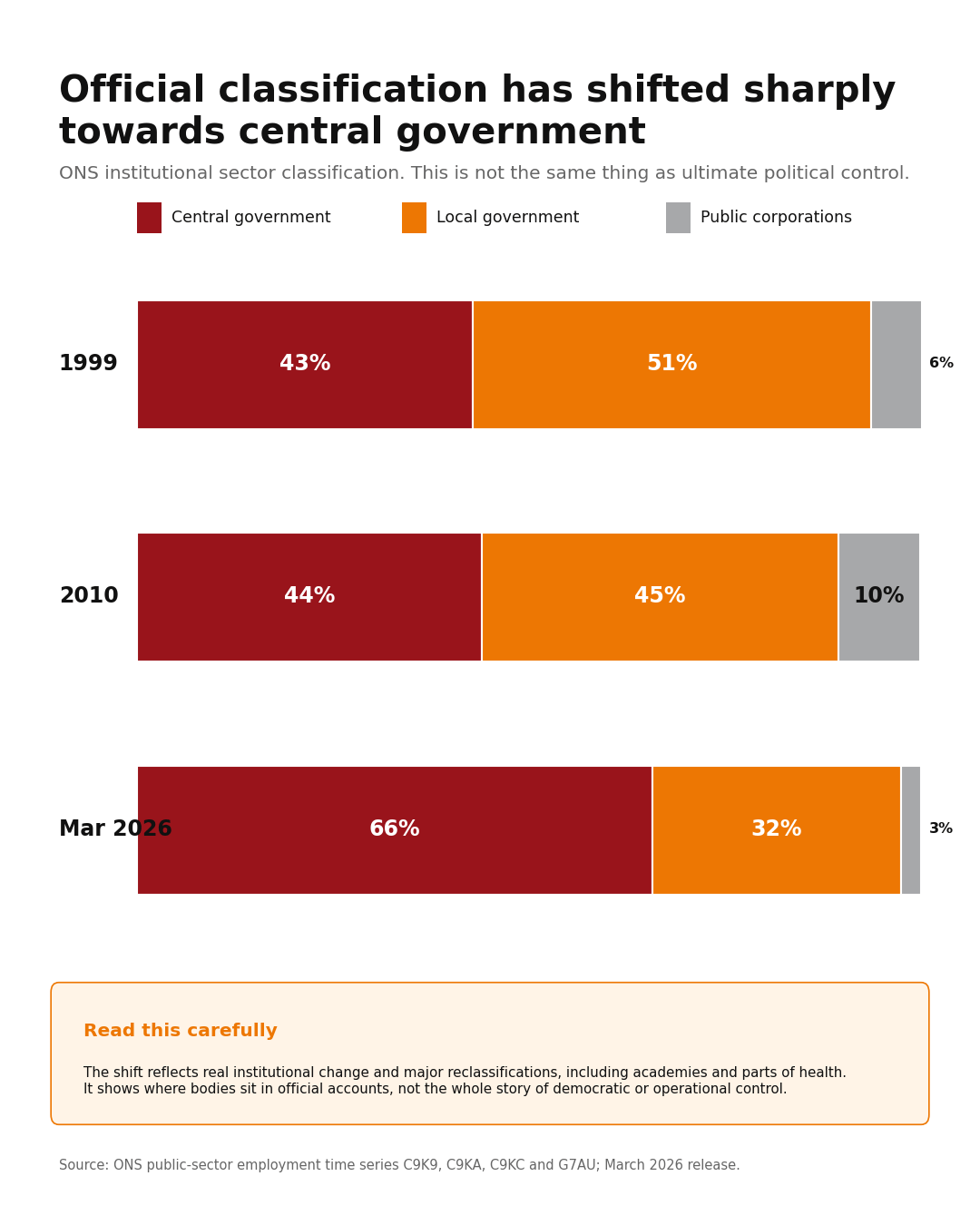
Figure 2. ONS institutional classification. This is a different question from the analytical control grouping in Figure 1.
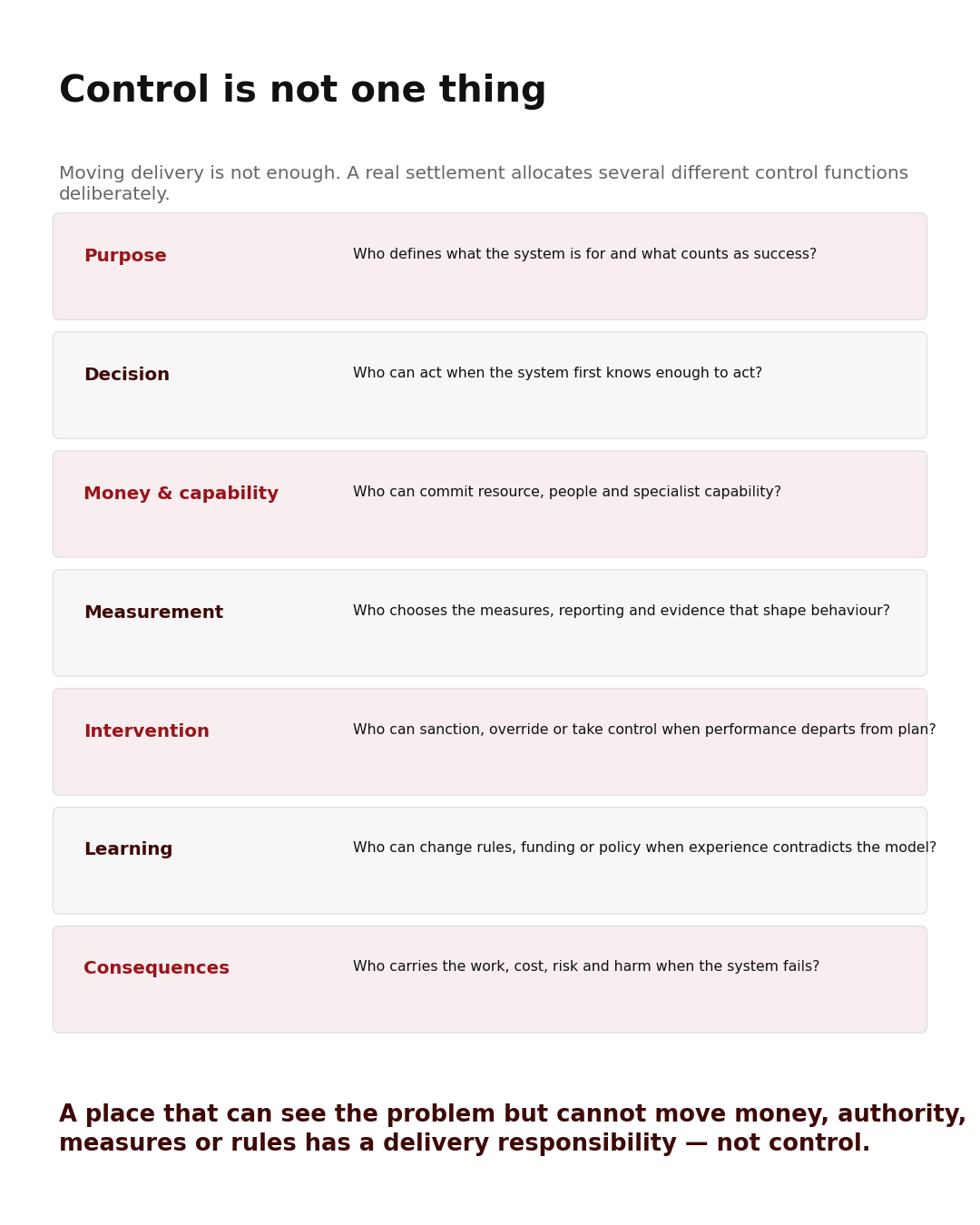
Figure 3. Different elements of control in this system
Six tests for rewiring
The existing argument can be stated through six practical tests: boundary, demand, authority, capability, measurement and sustainment.
| Test | Diagnostic question |
| Boundary | What is the real system whose performance we are trying to improve? |
| Demand | What are people actually asking for, in their own words? |
| Authority | Who can act when the system first knows enough to act? |
| Capability | Do they have the time, information, relationships, skill and resource? |
| Measurement | What behaviour will the measures and assurance regime produce? |
| Sustainment | Will the new pattern survive pressure, turnover, inspection and politics? |
Boundary
What is the system whose performance we are trying to improve?
Is it the NHS, a council, an integrated care system, a strategic authority, a neighbourhood, or the life of the person?
The declared boundary often differs from the operating boundary. Leaders speak about whole-person or whole-place outcomes while budgets, performance and accountability remain attached to organisations.
The social care debate illustrates this. If the boundary is hospital flow, the solution will emphasise discharge and community capacity. If the boundary is the person’s life, it will also include prevention, housing, income, relationships, choice, contribution and support for family carers.
The boundary determines what can be seen and whose costs count.
Demand
What are people actually asking for, in their own words, when they first encounter the system?
Most public service demand data is already processed. It records the service category, not the person’s purpose. People learn to reshape their stories to fit eligibility criteria and available provision.
Citizen contact should be part of the state’s sensory system. It should reveal patterns of unmet need, failed processes, emerging risks, opportunities for earlier action and the effects of policy. Treating contact primarily as a cost to reduce damages the system’s capacity to perceive its environment.
Devolution without this sensory capability will simply move existing datasets and categories to a new administrative level.
Authority
Who can act when the system first knows enough to act?
The answer is often ‘nobody’.
Frontline workers sense the problem but cannot alter a package, commit modest resources, cross a service boundary or challenge the process which created the demand. Matters are escalated through increasingly distant approval structures. Delay creates risk and repeat work.
Authority should sit as close as practicable to the point of knowledge, with clear constraints and rapid access to additional expertise.
That principle applies to the care worker facing a situation which cannot be resolved in 15 minutes. It applies equally to neighbourhood teams, councils and mayors.
Capability
Authority without capability is reckless. Capability without authority is decorative.
Local institutions need people, skills, data, relationships, money and organisational memory. Neighbourhood teams need time and practical access to wider resources. Citizens and community organisations need infrastructure, not occasional invitations to unpaid participation.
The Rewiring Statement recognises that functions must be accompanied by transferred resources and capability. The harder question is whether this transfer will survive the pressure to realise central savings first.
The social care speech makes a related point: care cannot improve while the workforce remains insecure, underpaid and unable to exercise its skill.
Measurement
What behaviour will the new measures produce?
The Neighbourhood Health Framework combines national minimum goals with locally developed outcomes. That is sensible in principle. But many of its specified metrics concern non-elective admissions, bed days, A&E performance, ambulance conveyance and discharge delay. It also includes patient experience, staff experience and agreed care plans.
These measures reflect real pressures. Yet they can still make neighbourhood health and social care subordinate to NHS flow.
A system designed around people’s lives also needs to learn about stability, independence, connection, confidence, repeat demand, unresolved need, trust, continuity and outcomes defined by the person. It needs to distinguish real prevention from displaced demand.
Measures are not passive descriptions. They participate in the system. They shape attention, resources and behaviour.
Sustainment
Will the new pattern survive changes of leadership, financial pressure, political attack, inspection and organisational fatigue?
Relational and place-based models frequently exist as protected exceptions. Their success depends on a few leaders, informal permissions and temporary funding. When those conditions disappear, the surrounding system absorbs or rejects the work.
This is often described as a failure to scale. More often, the experiment worked but the host system did not change.
Sustainment requires altered budgets, governance, workforce arrangements, information systems, measures, commissioning and political narratives. It requires local leaders who can defend variation and central leaders who can tolerate results emerging through methods they did not specify.
The missing control function is learning
The state produces vast quantities of performance information but has a weak capacity to learn from the work. Dashboards show authorised categories. They do not necessarily show what is happening.
A more useful audit function would connect quantitative data with real cases, citizen contact, frontline observation, complaints, spending flows, community intelligence, weak signals and experiments. In Viable System Model terms, this is closer to System 3*: a direct, maintained understanding of operations which does not depend entirely on information travelling through the formal hierarchy.
This is not ministerial inspection, nor another reporting requirement. It is how the system checks whether its own descriptions remain connected to reality. Places need this capability locally. The centre needs it across places. Neither should monopolise interpretation.
The centre should be able to identify patterns that no individual place can see: systemic inequalities, provider failure, national workforce problems, harmful variation and interactions between policy regimes.
Places should be able to show where national policy produces failure demand, blocks adaptation or rewards the wrong behaviour. Learning has to travel in both directions and change decisions in both directions.
Participation is not yet citizen power
The Cabinet Statement’s commitment to move beyond performative consultation is welcome. The neighbourhood governance duty and the Plan for Neighbourhoods also create openings for more local participation.
But the language still tends to position citizens as contributors to government policy rather than as actors with their own authority, relationships, assets and capacity. Participation can mean supplying views. Citizen power means being able to initiate, decide, own, act and learn.
Neighbourhood governance will matter only where it changes the relationship between institutions and citizens. A neighbourhood forum with no budget, no access to information and no influence over service design may produce conversation but little control.
A deeper rewiring would recognise that public value is not produced only by government and delivered to passive recipients. It is produced through relationships among citizens, families, associations, public workers, institutions and places. Institutions then become participants in a wider system, not its sole organising centre.
What a more strategic centre would do
A smaller centre cannot simply be a reduced centre. It needs a different competence. It should:
- Establish clear national purpose and rights.
- Redistribute resources between places.
- Maintain national data and infrastructure where common systems create value.
- Protect people from local failure and harmful variation.
- Coordinate issues which cross place boundaries.
- Support comparison and learning without imposing uniform solutions.
- Reconcile conflicting national policies before they reach places.
- Remove obsolete requirements when functions are devolved.
- Maintain enough direct intelligence to know when intervention is necessary.
- Intervene transparently, proportionately and temporarily.
This is more demanding than central programme management. It requires the centre to exercise judgement about when to act and when to stop acting. The Cabinet Statement’s promise that central government will not duplicate devolved functions is therefore a crucial test.
Stopping is harder than announcing.
Departments retain people, budgets, professional identities, parliamentary accountabilities and political exposure. Those do not disappear because a function has formally moved. Without active decommissioning, the centre may recreate its role through guidance, outcome frameworks, assurance, intervention powers and data demands. The organisation chart will look decentralised while control remains central.
The practical test
The government has moved the debate forward. It has accepted that over-centralisation is damaging growth, public services and democratic accountability. It has connected devolution with public service integration, prevention, fiscal reform, neighbourhoods, participation and state capability.
The implementation test is whether a place can:
- See patterns emerging from people’s lives and citizen contact;
- Bring together the actors able to respond;
- Move money and authority towards earlier action;
- Adapt provision to local conditions;
- Learn from what happens;
- Change the measures, rules and commissioning which produced the problem;
- And feed that learning back into national policy.
There is an equivalent test in the other direction.
- Can the centre identify what only it can do, transfer the rest, and then stop interfering unless agreed conditions for intervention are met?
- Can strategic authorities devolve further to councils, neighbourhoods and citizens rather than becoming regional Whitehalls?
- Can a national care service create a national guarantee without imposing a national operating hierarchy?
- Can neighbourhood health improve people’s lives rather than using community provision chiefly to repair hospital flow?
- Can participation change who decides, not merely improve the information available to existing decision-makers?
Rewiring the state will succeed where authority moves towards relevant knowledge, while accountability remains connected across levels.
Otherwise, the wires may be new, but the current will still run in the same direction.
Sources and notes
- Public sector employment, UK: March 2026 — Office for National Statistics, published 18 June 2026 source
- Neighbourhood Health Framework — Department of Health and Social Care and NHS England, March 2026 source
- Integrated Settlement Policy Document — UK Government, 11 June 2025 source
- English Devolution and Community Empowerment Bill / Act stages — UK Parliament; Royal Assent 29 April 2026 source
- Remaking the State Annual Conference 2026 — Steve Reed speech, 1 July 2026
- Place Based Budgets — UK Government, 13 July 2026
- Machinery of Government changes: Fact Sheet — Cabinet Office, 22 July 2026
- Cabinet statement on rewiring the state — 31 July 2026
- Prime Minister social care statement / National Care Service — late July 2026


One thought on “Rewiring the state as a control problem”