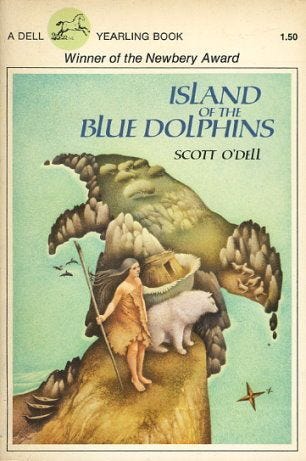

Learning the island. Join the conversation on LinkedIn. https://www.linkedin.com/posts/antlerboy_i-read-scott-odells-island-of-the-blue-activity-7458465671245570048-T5bQ?utm_source=share&utm_medium=member_desktop&rcm=ACoAAACuq-oBecVFDW6PCf3lkoG-peMeuLBeoho
I read Scott O’Dell’s ‘Island of the Blue Dolphins’ when I was five. I’m not sure I understood it, but I think I absorbed it.
It’s the story of Karana, a girl left alone on an island after her people leave. She survives for years. She learns the weather, the animals, the tides, the materials around her. She builds shelter. Makes tools. Finds food. Faces danger. Grieves. Adapts.
At five, that seeems to have gone in deep (and maybe gave me an inclination: it’s sometimes ok to not understand and mechanically work through things, but dive in and swim around until it starts to make sense).
I suspect it shaped one of my basic assumptions about the world: Systems fail. Rescue may not come. But the world is still intelligible, if you pay attention.
That isn’t a bleak lesson. Or not only bleak; it’s also a lesson in agency.
Karana doesn’t master the island in some crude heroic way. She becomes part of it. She learns its patterns. She changes through relationship with it. The wild dogs are not only enemies. Animals are not only resources. The environment is not scenery. It’s a living system.
That may be one reason my heart has never really been in transformation as something done to people, from the outside, by people with PowerPoint decks.
Real change is more like living on the island:
– Observe closely.
– Work with what’s there.
– Build capability.
– Notice feedback.
– Respect context.
Become responsible within the system you’re trying to change.
The book also left me with something more complicated: abandonment can become apprenticeship.
That’s powerful. It’s also dangerous. It can make you overvalue resilience. It can make you impatient with dependency. It can make you assume people are more capable than they believe they are.
Often, they are. But the task isn’t to tell people to toughen up. It’s to help build the conditions in which capability can grow.
I think that book gave me an early model of dignity (with a female hero): not status, not certainty, not rescue, but situated competence under difficult conditions.
Make the shelter, watch the tide, learn the island, don’t wait for the ship.
What did you read early on that shaped you?

