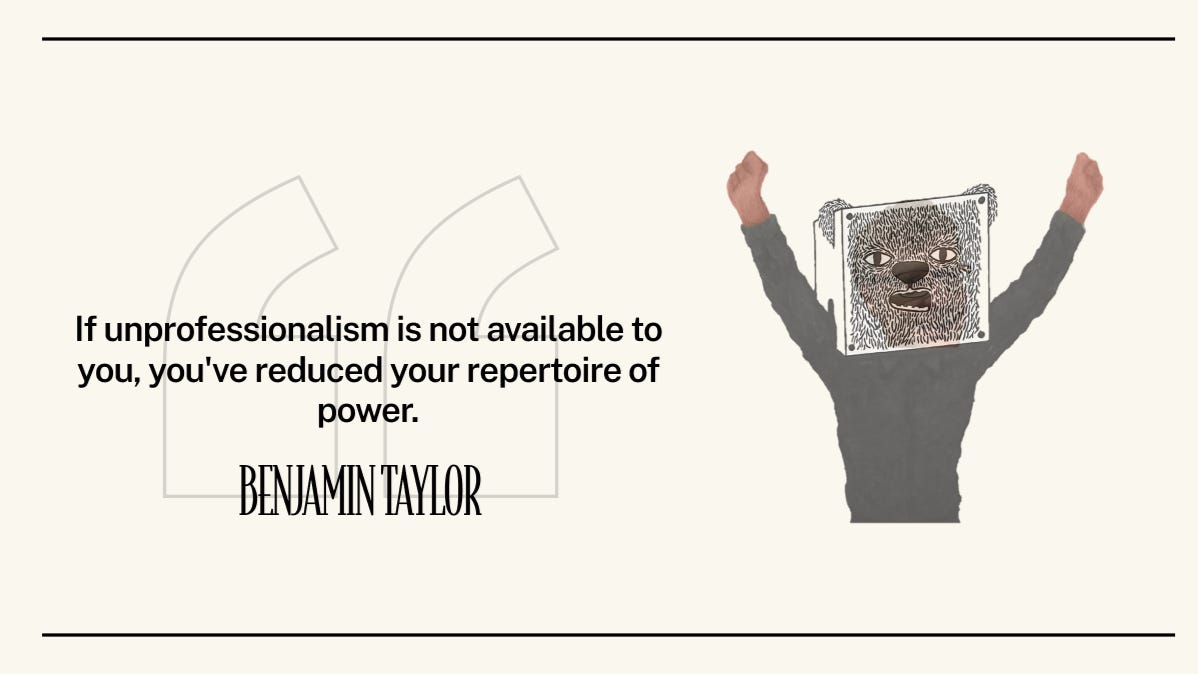

Professionalism can support judgement, competence and care — but it often means knowing how to keep difficult truths in a socially acceptable form. https://www.linkedin.com/posts/antlerboy_leadership-corporateculture-psychologicalsafety-activity-7470369946812895232-oAlE have you seen an organisation good at elegantly not saying important things?
Professionalism can support judgement, competence and care — sometimes. But it often means something narrower — knowing how to keep difficult truths in a socially acceptable form.
Many of the things that block better public services are visible; they’re rarely speakable in their full shape, where it matters. We can see when a referral is a deflection not progress. When a target improves a number by damaging the work. A front door that’s really a sorting mechanism for institutional convenience. A reorganisation that’s made people more guarded, more territorial. But a load of what passes for professionalism consists in handling those realities indirectly — through euphemism, abstraction and the etiquette of not quite saying.
Some restraint is necessary; civilisation depends on it. Not every anxiety deserves immediate expression, and not every difficult truth improves matters when blurted out. But public services have developed a habit of confusing emotional containment with institutional health. The result is a kind of polished unreality; highly articulate, a little brittle, and often very good at describing symptoms while circling the source.
Status is mixed up in this. Professionalism is partly a code of belonging — how to speak, how to dress, how to disagree safely, which emotions count as evidence of seriousness, which forms of candour are treated as wisdom and which as loss of control. It’s particularly codified in large-scale institutions like the Civil Service and NHS, and always flavoured by the individual organisaiton. As with all such codes, some people can bend them and gain authority and ‘gravitas’; others are judged by them much more strictly.
That asymmetry means we often grant frankness to the already secure, and demand self-suppression from those with less protection.
This helps explain why the language of reform is often so weak. We say ‘prevention’, ‘integration’, ‘relational’, ‘neighbourhoods’, ‘citizen voice’ all day. The difficulty comes when those ideas threaten settled authority, managerial identity, tidy lines of accountability, or the fiction that people’s lives arrive in service-shaped pieces. Then the abstractness increased, diagrams multiply, governance is refreshed, living difficulty is translated into something less awkward. And sometimes angry rebels burst out from the seams, putting themselves beyond the pale and exemplifying the profane.
The unsaid doesn’t vanish because it has been professionally passed over. It remains active, showing up as delay, duplication, compliance theatre, ritual referral, strategic vagueness, over-assessment, and the familiar collective behaviour where everyone performs belief in an official story that no longer explains much.
Professionalism is valuable when it enlarges our capacity to do serious work under pressure. It’s corrosive as a social technology for keeping reality politely distanced.
When have you seen an organisation good at elegantly not saying important things?
The Unprofessionalism Podcast: https://www.linkedin.com/pulse/episode-018-norm-breakers-privilege-benjamin-taylor-myriam-hadnes-wdt8e/?trackingId=kRcDzZgpRfqDpLTFpye%2FmQ%3D%3D
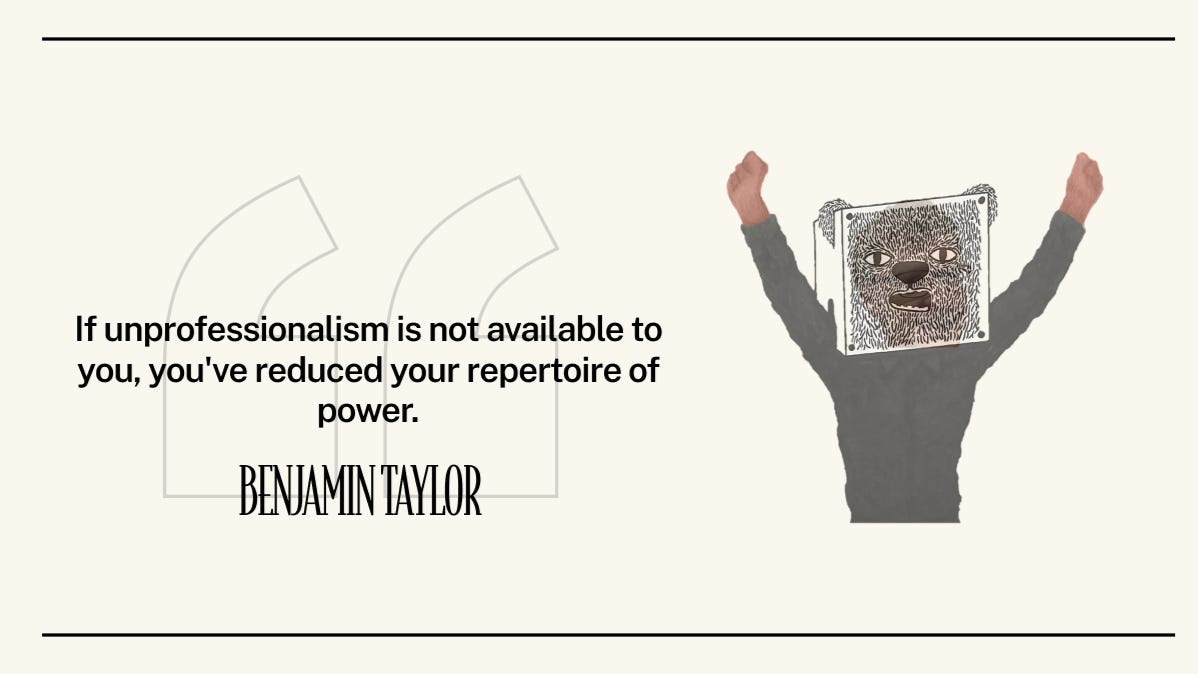


Ben, without explaining to other readers what i mean, (cos it’s a secret)
the skill of holding uncomfortable info and presenting it in a timely and relatable way, like what you describe, is a core aspect of Coco, and I’m not clowning.
LikeLiked by 1 person